

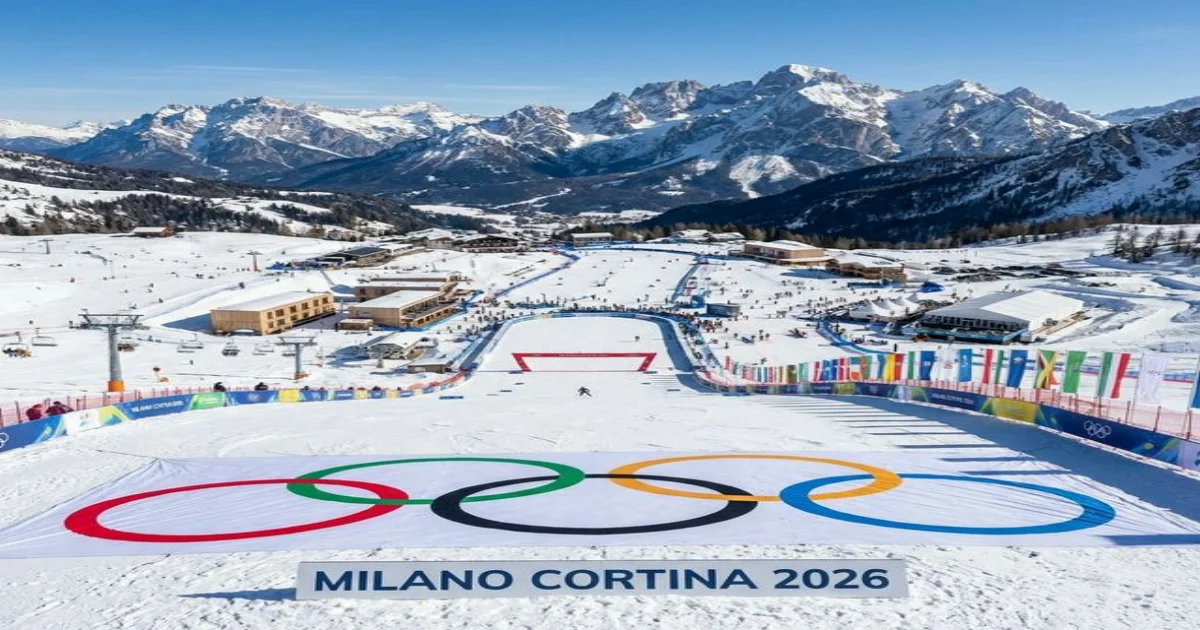
The Milano Cortina 2026 Winter Olympics mark a turning point for Italian skiing. Beyond the sport, the real story is the legacy: new lifts, upgrades, better transport and a better experience for skiers and visitors.
The Games centre on the Dolomites of Veneto and Trentino, with Cortina d’Ampezzo as the main hub for several events. At the same time, many resorts are speeding up investment in gondolas, snowmaking and digital services to become more competitive and more sustainable.
The key areas
Cortina is the operational centre, with work on the lifts and on the links between ski areas. Our Cortina d’Ampezzo page has up-to-date technical data on altitudes, slopes and what is running.
The wider Dolomites also benefit from the knock-on effect. Dolomiti Superski, for example, is in the middle of a wave of investment in access and lift quality.
The lifts that really make a difference
For the Olympics, speed is not the only thing that counts: reliability, back-up capacity and consistency matter just as much. The lifts with the biggest impact are usually the ones that:
- link busy points on the mountain at peak times;
- cut the time it takes to reach race venues or viewpoints;
- replace old, energy-hungry lines.
Among Italy’s most innovative cable cars, Skyway Monte Bianco remains a useful benchmark for how technology, a panoramic experience and a premium offer can work together.
The effect on tourism and ski pass prices
In the short term, the Olympics bring peaks in demand and more international exposure. In the medium term, the more lasting effect is a longer season, thanks to better services, multi-area packages and more reliable logistics.
That makes it all the more important to compare the real cost of a ski week. Our Compare ski passes page sets the main Italian ski areas side by side.
Opportunities for 2026 and beyond
For Italians, the value is not just ‘seeing the Games’ but having a more modern mountain network. If the plans are completed on schedule, the resorts will be able to offer:
- shorter transfers between neighbouring areas;
- more comfort on the busiest routes;
- better links between skiing, accommodation and local transport.
For the lift companies, the real challenge will be to keep these gains after the event, with high standards of maintenance, sustainability and service.
Race schedule: where and when
The events are spread over several venues in Lombardy, the Aosta Valley, Trentino-Alto Adige and Veneto. Here is the overall picture:
| Venue | Events | Dates |
|---|---|---|
| Cortina d’Ampezzo | Women’s downhill and super-G | 6-8 February 2026 |
| Bormio (Stelvio) | Men’s downhill and super-G | 9-11 February 2026 |
| Livigno (Mottolino) | Freestyle, snowboarding (halfpipe, big air, ski cross) | 8-18 February 2026 |
| Cortina (Tofane) | Women’s giant slalom | 16-18 February 2026 |
| Anterselva (Antholz) | Biathlon | 11-20 February 2026 |
| Predazzo (Val di Fiemme) | Ski jumping, Nordic combined | 4-13 February 2026 |
| Verona (Arena) | Ceremonies | February 2026 |
| Milan (PalaItalia) | Ice hockey, skating | February-March 2026 |
The mountain events are concentrated in the first two weeks of the Games, with Cortina d’Ampezzo and Bormio as the main alpine skiing hubs. Cortina hosts the women’s races and part of the slalom, while Bormio’s Stelvio run, a classic World Cup venue, stages the men’s speed events. Livigno, with its high plateau and reliable snow, becomes the centre for freestyle and snowboarding. The wide geographical spread is one of the defining features of these Games, which take in very different mountain regions and cultures.
How to buy tickets
Tickets for Milano Cortina 2026 are sold through the organisers’ official website, which handles all sales centrally for both Italian and international buyers. Prices vary widely between sessions. The opening and closing ceremonies are the most expensive and most sought-after tickets, while qualifying rounds in some sports are much cheaper, often under €30.
The downhill and slalom races have always been the most popular with Italian spectators, so look for tickets well in advance. A practical tip: buy packages that include several sessions at the same venue. They often work out cheaper than single tickets and make for a fuller experience. For some of the top sessions, especially the alpine skiing finals in Cortina, tickets had already sold out by the end of 2025. If you are planning now, check availability on the authorised resale market.
Where to stay during the Games
Accommodation is probably the hardest part if you want to watch the mountain events. During the Olympics, room rates in Cortina d’Ampezzo are in many cases three times the usual seasonal price. Booking at least 12 months ahead is the minimum to find rooms at reasonable rates: if you left it late, you will probably find only what is left, at very high prices.
Belluno is a practical and much cheaper alternative. It is about 40 minutes by car from Cortina and has a range of hotels and B&Bs at normal prices. Bolzano is a good base for reaching several venues: Bormio is about two hours away and Cortina an hour and a half, by motorway to Bressanone and then on main roads. Trento is a good starting point if you want to combine the races in Bormio with a visit to Val di Fassa.
In general, the smaller villages around the venues are often the smartest choice. B&Bs in places such as Pocol, Calalzo or Auronzo di Cadore are less than an hour from Cortina and often cost half as much as the main resorts.
The Olympic legacy
The impact of the Olympics on Italian ski areas does not end with the flame. The FIS-approved runs built or upgraded for the Games stay in use for the following seasons and can host World Cup, European Cup and national championship races. For Cortina and Bormio, that means keeping a high international profile in the years after the Olympics.
The new lifts (gondolas, cable cars and magic carpets installed or renewed to Olympic standards) remain open to ordinary skiers and visitors. Better digital connections and logistics in the mountain resorts improve the experience for everyone in the long run, whatever the sporting calendar.
The boost to international tourism may be the most lasting result. The worldwide exposure of Olympic TV coverage brings new foreign visitors every year who are discovering Italian ski areas for the first time, and the economic benefit spreads across the whole mountain hospitality sector.